News
17. August 2026
3 minutes read time
When You Make the Syringe, Vials & Cartrigdes the Packaging Should Be Ready Too


How manufacturers of primary containers can benefit from Tub & Nest systems
Muri, Switzerland — If your business turns high-quality glass (or polymer) components into primary containers—for example syringes, vials, or cartridges—you know the real work starts after the forming and finishing steps. What happens next often defines whether your customers experience your product as “ready-to-use” or as “one more thing to manage.”
That’s where Tub & Nest packaging comes in.
The point where “components” become “ready to run”
Many manufacturers in the injectable supply chain source glass tubing or containers and convert them into finished syringe systems. Your customers then expect reliable handling through sterilization (e.g. autoclaving), transport, storage, and aseptic filling—without compromising cleanliness or geometry.
A Tub & Nest system supports this transition by providing:
- protected, structured positioning of each unit,
- stable geometry for automated handling,
- and packaging that is designed to work with common loading and filling concepts.
In short: your syringe can arrive not only as a finished component—but as a process-ready unit.
Why Tub & Nest matters for your customers
In aseptic environments, packaging is not secondary. It directly affects:
- line efficiency (misalignment, stoppages, manual interventions),
- quality risk (particles, scratches, breakage),
- and throughput stability (repeatable, predictable handling).
When your syringes run smoothly on the line, it reflects back on you—because packaging performance is often perceived as part of the product performance.
What Fischer Söhne brings to the table
Fischer Söhne AG develops high-quality plastic tubs and nests off-the-shelf or custom made for life-science applications—designed to support safe storage, sterilization and filling of sensitive products such as prefilled syringes and vials. Our approach is built around a simple idea: packaging should help reduce complexity, not add to it.
In practice, that means focusing on:
- clean, controlled manufacturing and robust quality routines,
- integration-ready designs that fit common equipment concepts,
- standard formats with short lead times where possible,
- and collaborative discussions when customer requirements go beyond standard.
A concrete example: your syringe in our Tub & Nest

Imagine the downstream steps your customers manage every day: incoming goods, unpacking, staging, loading, aseptic filling, re-pack, distribution. Each interface is a potential risk or delay.
A Tub & Nest system helps simplify that flow by keeping the product:
- protected during transport and handling,
- positioned for automated processing,
- and organized for repeatable workflows.
For companies supplying syringes into pharma and biotech programs, this can become a practical lever: less rework, fewer interventions, and a smoother path from component to filled product.
Sustainability is becoming part of the conversation
The industry is increasingly asking how circularity can be introduced—even in material-intensive packaging formats. Several market actors are exploring concepts for recycling loops and reduced environmental footprint. We see this as an engineering topic that requires feasibility checks, process compatibility and collaboration across the value chain—not marketing claims.
Let’s talk shop (not sales)

If you are currently evaluating how to deliver syringes (or similar primary containers) in a way that is ready for aseptic filling, we are happy to exchange perspectives—on line compatibility, quality expectations, and what “ready-to-use” should mean in practice.
Contact: info@fischersoehne.ch | www.fischersoehne.ch
Fischer Söhne AG — Life Science. Packaging Solutions.
See our other content
News
22. July 2026
1 minute read time
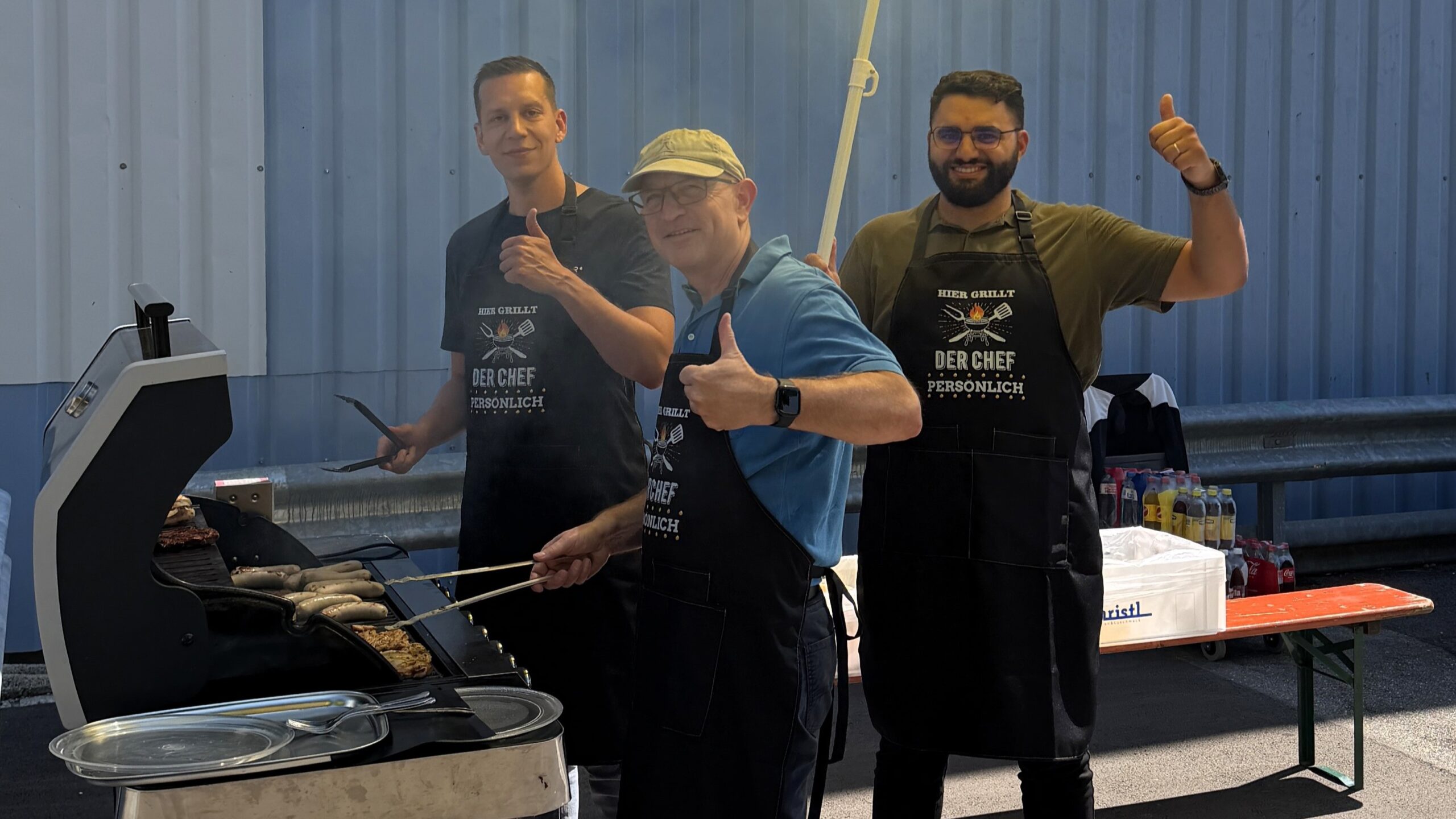
Summer BBQ and Company Holiday: Heading into the Summer Break Together
Read article
News
20. July 2026
2 minutes read time
The Fischer Carboy is back: a reliable container for sensitive liquids
Read article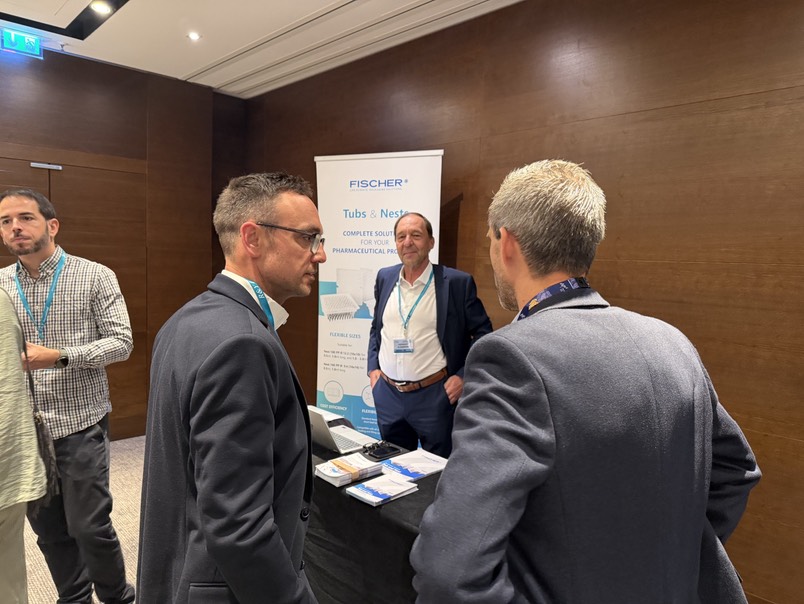
News
23. June 2026
3 minutes read time
Innovative Pre-Filled Syringes & Injection Devices Conference 2026: focused exchange in Berlin
Read article
News
5. May 2026
2 minutes read time
EnAW Certificate 2026: Energy Efficiency as Part of Our Responsibility
Read article
News
13. April 2026
3 minutes read time
One Team, Two Specialists: How Fischer Söhne AG and Fischer Söhne Extrusion AG Work Together
Read article
News
25. February 2026
3 minutes read time
Our Contribution to the Circular Economy: PET Recycling at Fischer Söhne AG
Read article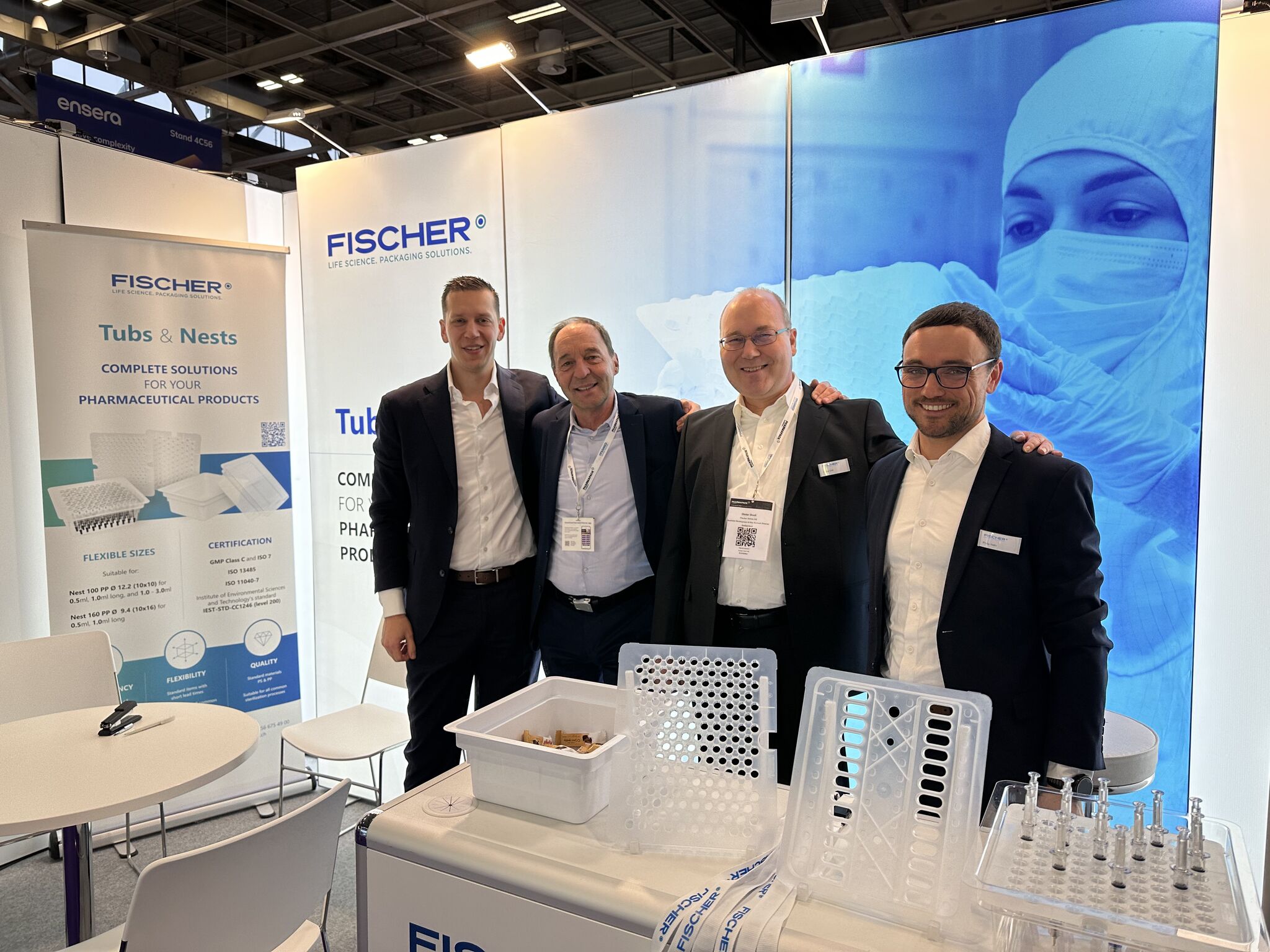
News
23. January 2026
3 minutes read time
Pharmapack Paris 2026: high traffic, sharper conversations
Read article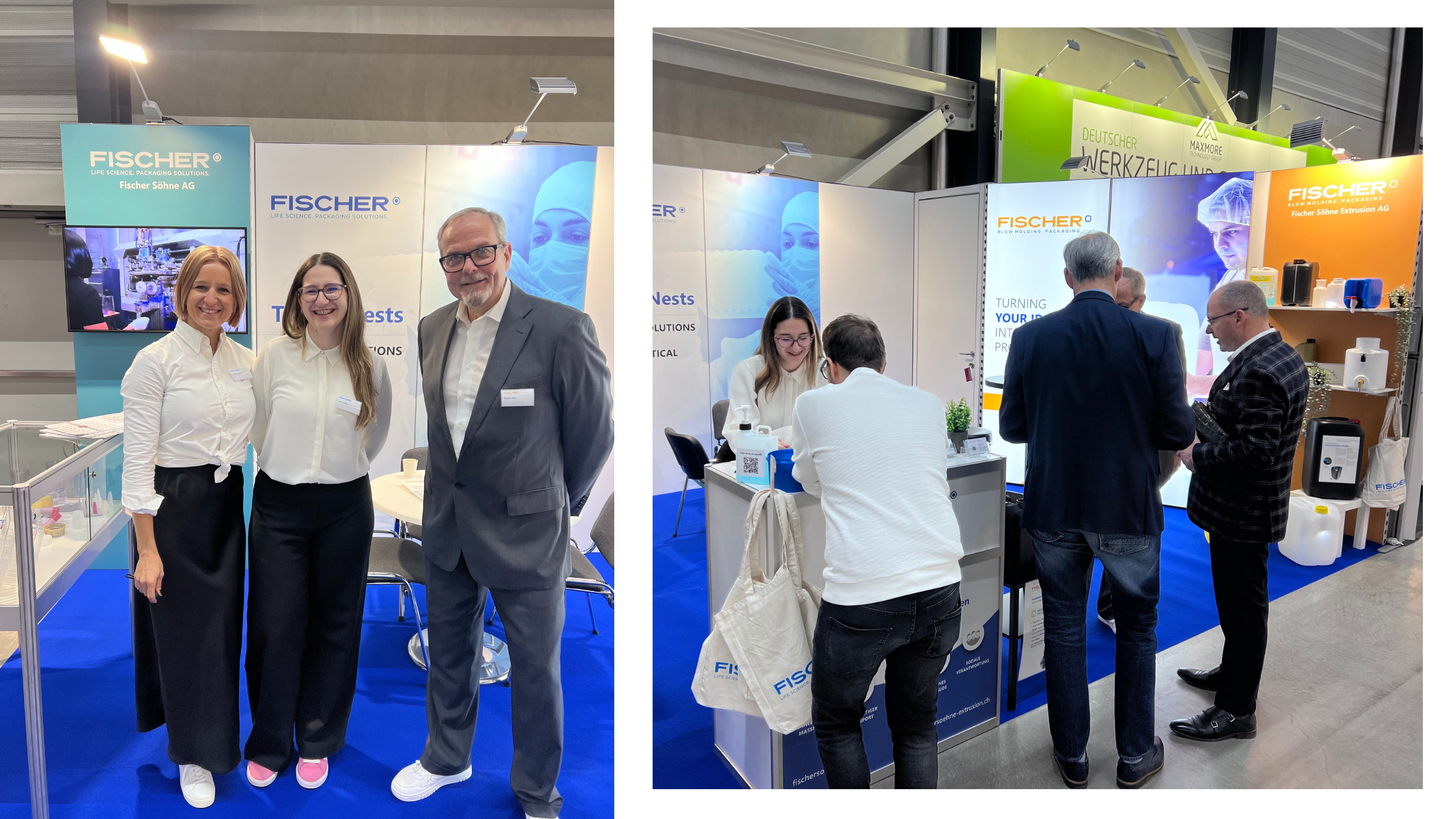
News
22. January 2026
3 minutes read time
Swiss Plastics Expo 2026: Community, circularity, and hands-on plastics know-how
Read article
News
20. November 2025
2 minutes read time
Recognized as a Performance-Sport-Friendly Apprenticeship Company 2025/2026
Read article/10